


 Most people think sleep begins when they turn off the lights.
In reality, your body starts preparing for tonight’s sleep the moment your feet hit the floor this morning.
Every morning your brain quietly resets its internal clock. The light you see, the movement you make, even when you eat breakfast all send signals that help determine when you’ll naturally become sleepy later that evening.
If you’ve been struggling with restless nights, the solution may not be a better bedtime routine—it might be a better morning.
 Your Body Runs on Light

Inside your brain is a tiny cluster of cells that acts as your master clock.
It keeps roughly a 24-hour schedule, but every morning it needs to be reset.
The strongest reset button isn’t coffee.
It’s sunlight.
Within minutes of getting outside, specialized cells in your eyes tell your brain:
“A new day has begun.”
That signal starts a countdown that eventually leads to melatonin being released roughly 14–16 hours later.
Miss that morning signal and your internal clock can drift, making it harder to fall asleep at night.
 Spend 10 Minutes Outside
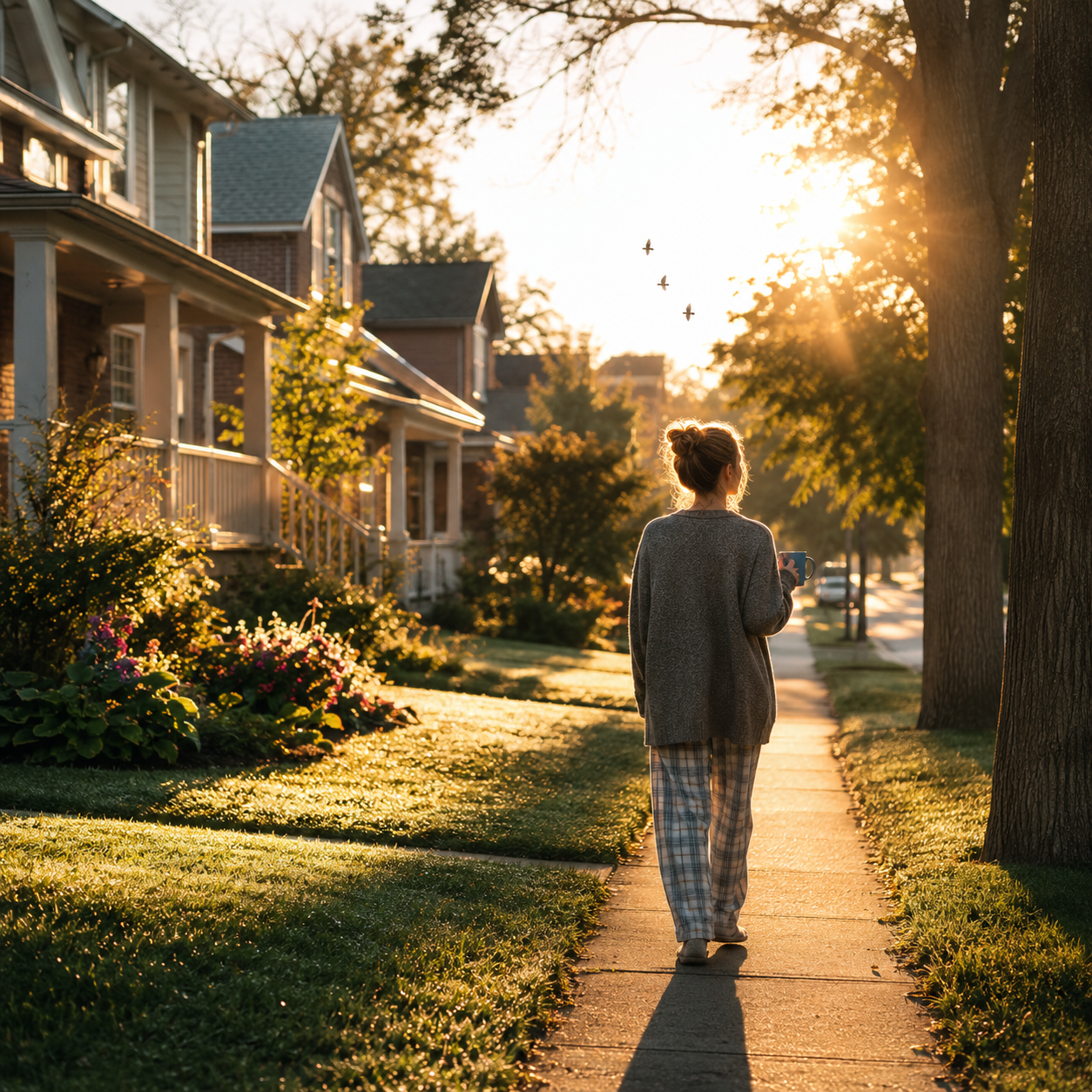
You don’t need to stare at the sun.
Simply stepping outdoors shortly after waking exposes your eyes to thousands of times more light than typical indoor lighting.
Even on cloudy mornings, outdoor light is dramatically brighter than most homes.
A short walk around the block can be enough.
 Move Before You Sit

Gentle movement helps tell your body it’s daytime.
It doesn’t have to be a workout.
Try:
- stretching
- watering the garden
- walking the dog
- cycling to work
- sweeping the porch
Movement increases alertness while helping your body establish a stronger daily rhythm.
 Eat Something (Eventually)

Food is another time signal.
You don’t necessarily need breakfast immediately—especially if intermittent fasting works well for you—but eating at roughly the same time each day helps reinforce your body’s schedule.
Regular timing matters more than perfection.
 Delay the Phone
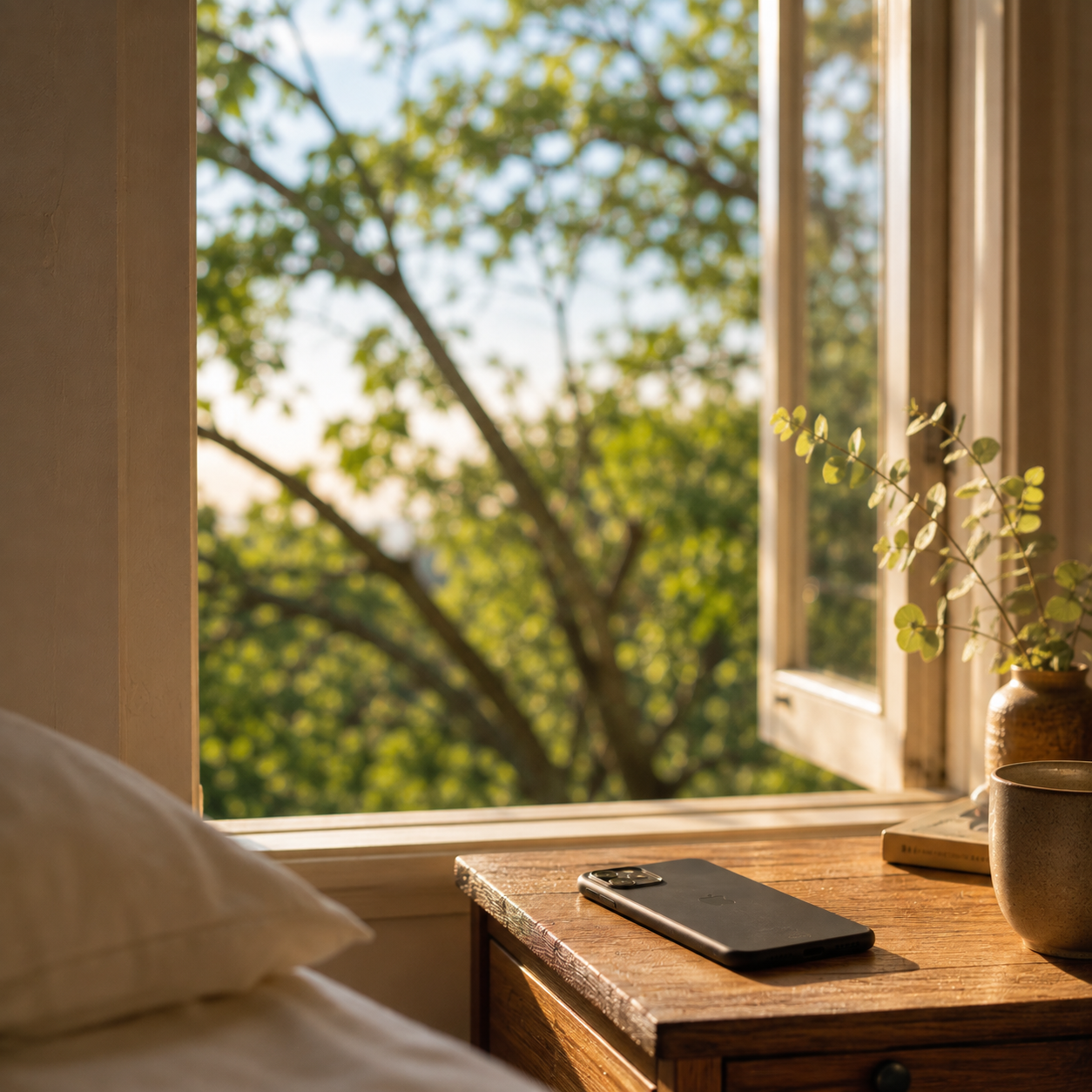
Many of us wake up by flooding our brains with emails, news and social media.
Instead, give your brain a few quiet minutes first.
Open a window.
Take a few deep breaths.
Notice the weather.
Listen to birds.
These small moments create a calmer transition into the day.
 Save Coffee for Later?

Some sleep researchers recommend waiting 60–90 minutes before your first coffee.
Your body naturally produces cortisol after waking to help you become alert.
Allowing that process to unfold before adding caffeine may reduce the afternoon energy crash many people experience.
Whether or not you choose to delay coffee, staying hydrated first is always a good idea.
 Protect the Evening

A strong morning makes a strong evening easier.
When your body receives clear signals that it’s daytime, it becomes much better at recognizing when night arrives.
That often means:
- falling asleep faster
- waking less during the night
- feeling sleepier at an appropriate hour
- waking more refreshed
 Tiny Habits Matter

You don’t have to overhaul your life.
Tomorrow morning, try just four things:
• Step outside.
• Move for ten minutes.
• Drink some water.
• Get out – Let your eyes experience the morning.
Repeat those small habits consistently, and your nights may begin improving all on their own.
 Closing

Good sleep doesn’t begin when your head touches the pillow.
It begins with the sunrise.
The better you greet the morning, the more likely your body will reward you with restful sleep that night.

Share the Sleep Journal
Know someone who’s struggling with summer sleep?
Forward this issue of the Sleep Journal to someone who could use better sleep. If they enjoy cozy sleep tips and the occasional dreamy story, invite them to subscribe and join us each month.
Until next month…
Sleep deeply. Dream kindly.
Live Yourself to Sleep.